The Hidden Danger of Data Silos: Why a Fragmented View Is Your Biggest Enterprise Risk
Accio Analytics Inc.
11 min read
Data silos are one of the most pressing challenges for businesses, especially in asset management. They occur when critical information is stored in isolated systems or departments, creating inefficiencies, compliance risks, and missed opportunities. Here’s why they matter and what you can do about them:
- Incomplete Data: Fragmented systems lead to outdated or inaccurate insights, making it harder for executives to make informed decisions.
- Higher Costs: Manual reconciliation and duplicated tasks drive up operational expenses.
- Compliance Issues: Scattered data complicates regulatory reporting, increasing the risk of fines and reputational damage.
- Lost Competitiveness: Firms with siloed data struggle to respond quickly to market changes, falling behind more agile competitors.
The Solution
Breaking down silos requires modernizing data systems, adopting unified platforms, and prioritizing real-time data access. Tools like Accio Quantum Core offer modular solutions to integrate existing systems, streamline workflows, and improve decision-making – without the need for a full system overhaul.
Key Takeaway: Unified data isn’t just a technical upgrade; it’s a business necessity to reduce risks, cut costs, and stay competitive in today’s fast-paced market.
How Fragmented Data Hurts Operations
Incomplete Portfolio Visibility and Risk Assessment
When data is scattered across different systems, asset management firms struggle to get a complete picture of portfolio performance and risk. Risk managers often miss important signals hidden in isolated data pockets, making it harder to make informed decisions.
Higher Costs and Manual Workarounds
Data silos lead to manual reconciliation – a tedious and error-prone process that drives up operational costs and increases the likelihood of reporting mistakes [3]. These inefficiencies don’t just waste time; they also make it harder for firms to meet regulatory requirements effectively.
Compliance Challenges and Regulatory Risks
Fragmented data systems scatter critical compliance-related information across various storage locations and formats, making it nearly impossible to compile a comprehensive view [1]. This lack of cohesion creates inefficiencies and complicates compliance reporting [1].
To make matters worse, extracting and consolidating data from disconnected systems often requires extensive manual work, which increases the risk of errors and delays in regulatory filings [3]. Many older financial institutions still rely on legacy systems that lack the ability to integrate seamlessly, further complicating compliance efforts.
Discrepancies in customer data across departments can lead to incomplete or inconsistent risk assessments, where key risks might be overlooked entirely [1]. Errors in regulatory filings, often caused by conflicting data or manual entry mistakes, can result in hefty fines, damage to reputation, and operational disruptions [2].
The True Cost of Data Silos
The impact of data silos goes far beyond operational headaches. They bring hidden financial burdens, competitive disadvantages, and even reputational risks that can have lasting consequences.
Financial Losses from Poor Data Quality
When data is fragmented across systems, it creates inefficiencies that quietly drain resources. For instance, different departments may end up duplicating tasks, like manually reconciling the same data, which inflates operational costs.
Without centralized access to market and portfolio data, firms often rely on outdated or incomplete information. This affects their ability to forecast accurately or allocate assets effectively. To compensate, companies may resort to costly manual processes, hire additional staff, or implement temporary fixes – all of which add to the financial strain. These inefficiencies don’t just hurt the bottom line; they also result in missed opportunities to make strategic moves.
Business Risks: Missed Opportunities and Lost Competitiveness
The problems caused by data silos don’t stop at financial losses – they also undermine a firm’s ability to compete. In today’s fast-paced environment, staying ahead requires quick, data-driven decisions. But fragmented systems make real-time insights nearly impossible, slowing down crucial processes like identifying trends or optimizing portfolios.
Firms that can’t adapt quickly to market changes or client needs risk falling behind more agile competitors. Disconnected data also hampers timely reporting and personalized services, which are essential for building client loyalty. Ultimately, data silos create a significant disadvantage in an industry where speed and precision are non-negotiable.
Reputation Damage from Compliance Failures
The inefficiencies caused by data silos can escalate into compliance failures, which carry severe reputational risks – especially in the heavily regulated U.S. financial sector. Regulatory violations not only result in hefty fines but also damage the trust that firms have worked for years to build. A study shows that reputation accounts for 63% of a company’s market value [5].
Take Citigroup as an example. Between 2013 and 2024, the bank paid over $1.5 billion in fines for issues tied to risk management and data governance. These included a $400 million penalty in 2020 for compliance shortcomings, an $82.8 million fine in 2024 for a $1.4 billion trading error, and a $136 million penalty the same year for inaccurate loan reporting [6].
"Our transformation is addressing decades of under-investment in large parts of Citi’s infrastructure and in our risk and control environment. When you unpack that, those areas where we had an absence of enforced enterprise-wide standards and governance, we’ve had a siloed organization that’s prevented scale, a culture where a lot of groups were allowed to solve the same problem in different ways, fragmented tech platforms" [6].
Jane Fraser, Citigroup’s CEO, highlighted how fragmented systems weakened their compliance framework, making it harder to manage risks [6].
Data breaches further compound the damage. In the financial services industry, the average cost of a breach is $5.97 million, but firms with fragmented systems face even higher costs – up to $1.2 million more [4]. These breaches can erode client trust, which is the cornerstone of long-term relationships.
Warren Buffett once said, "It takes 20 years to build a reputation and five minutes to ruin it. If you think about that, you’ll do things differently" [5]. For asset management firms, the risks posed by data silos go beyond inefficiencies – they threaten years of trust and brand credibility.
sbb-itb-a3bba55
Breaking Down Data Silos: Modern Solutions and Infrastructure
By streamlining data flows, companies not only reduce operational risks but also improve compliance and maintain a competitive edge. The good news? Data silos don’t have to be permanent. With the right strategies and modern tools, businesses can transform disconnected systems into unified platforms that deliver measurable value. The secret lies in understanding the essentials of modernization and selecting solutions tailored to the financial sector’s specific demands.
Requirements for Data Modernization
Breaking down data silos isn’t just about technology – it’s a full-scale overhaul of organizational, technical, and operational practices. At the core of this transformation is enterprise-wide data governance. This involves setting clear standards for data quality, access controls, and compliance protocols that work seamlessly across all departments and systems.
Leadership support is another critical factor. C-suite executives need to actively back the initiative, ensuring adequate resources are allocated for both technology upgrades and the change management processes that follow.
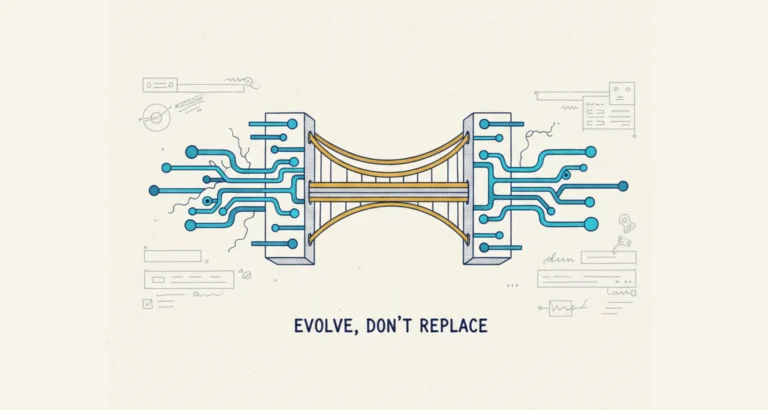
Instead of attempting a full system replacement, organizations benefit most from incremental modernization. This approach minimizes risks, reduces disruption, and allows firms to demonstrate quick wins while upgrading their existing infrastructure with new capabilities.
Another key component is proactive data management. Teams must be trained on new tools and equipped with API integration skills. The goal is to create an environment where data flows freely across departments while maintaining robust security and compliance measures.
Once these foundational elements are in place, implementing an integrated platform like Accio Quantum Core becomes the logical next step.
How Accio Quantum Core Solves the Silo Problem
Accio Quantum Core tackles data silos head-on with a modular, API-driven design that integrates seamlessly with existing systems. This allows asset management firms to retain their current investments while adding advanced functionality.
The platform’s microservices architecture breaks down complex data operations into specialized components, or agents, each designed for a specific financial function. Unlike monolithic systems, where a single failure can disrupt everything, these agents operate independently. This ensures that processes like portfolio calculations, risk assessments, and compliance reporting can run simultaneously without interference.
One standout feature is real-time data processing. Unlike traditional systems that rely on overnight batch updates, Accio Quantum Core delivers actionable insights in seconds. This speed empowers portfolio managers to react instantly to market changes, enables compliance teams to monitor regulations in real time, and helps executives make decisions based on up-to-the-minute data.
The platform also includes built-in data validation and traceability, ensuring accuracy and compliance. Every calculation, transformation, and decision point is logged and auditable, meeting stringent U.S. regulatory requirements.
Implementation is quick – typically just 2–3 weeks compared to the 9–18 months needed for traditional system replacements [7][8]. This rapid deployment is possible because Accio Quantum Core enhances existing systems rather than replacing them, allowing firms to start reaping benefits almost immediately.
Mapping Accio Quantum Core Agents to Business Outcomes
Accio Quantum Core’s agents are designed to address specific challenges caused by data silos. Each agent delivers targeted solutions that translate directly into business value, helping executives prioritize implementation and measure success.
| Agent | Primary Function | Business Impact | Silo Problem Addressed |
|---|---|---|---|
| Holdings Agent | Calculates real-time portfolio positions | Enables immediate risk assessment and compliance reporting | Eliminates reconciliation delays |
| Transactions Agent | Processes transactions instantly | Ensures live P&L accuracy and faster market response | Removes batch processing delays |
| Returns Agent | Provides live performance attribution analysis | Supports proactive investment strategy adjustments | Replaces outdated performance data |
| Risk Exposure Agent | Monitors enterprise-wide risk | Prevents systemic risks across portfolios | Unifies fragmented risk systems |
| Security Analytics Agent | Analyzes asset classes comprehensively | Offers a consolidated market performance view | Combines separate security databases |
| Sentinel Agent | Optimizes strategic investments | Enhances portfolio construction efficiency | Connects disconnected investment research |
| Storyboards Agent | Generates executive-ready dashboards | Delivers clear, consolidated performance insights | Replaces manual data combination |
| Global Settings Agent | Centralizes data governance | Simplifies data quality maintenance | Ensures consistent analytics |
| Language Module | Supports multi-language functionality | Facilitates global team collaboration | Breaks down communication barriers |
This modular framework allows firms to start with the agents that address their most pressing challenges and scale their capabilities over time. By purchasing only the features they need upfront, organizations can manage costs effectively while expanding functionality as they see results [7][8].
Key Considerations for C-Suite Executives
When it comes to tackling the challenges of fragmented data, executives need to evaluate their organization’s readiness for modernization. Addressing data silos effectively requires a clear understanding of inefficiencies. Look for signs like excessive manual work, inconsistent data, delays in decision-making, and customer service bottlenecks to shape a cohesive data strategy.
Questions for Assessing Readiness
These questions can help you identify areas that need immediate attention and guide your modernization efforts:
- Operational Efficiency Indicators:
Are your teams spending too much time manually piecing together reports from various systems? Is valuable time being wasted tracking down redundant or scattered data? - Data Quality Concerns:
Do reports from different departments often conflict when they should align? Are inconsistencies in client records or portfolio details leading to decisions based on incomplete or inaccurate information? - Decision-Making Speed:
How quickly can your team gather the data needed for strategic decisions? Are manual processes slowing your ability to adapt to market changes? - Customer Experience Metrics:
Are clients facing delays or issues because disconnected systems hinder service delivery? Do your customer service teams have access to complete interaction histories, or are fragmented views affecting service quality?
Conclusion: Gaining Business Agility with Unified Data
Data silos are one of the biggest hurdles for enterprise success in today’s asset management world. When vital information is stuck in disconnected systems, companies face rising operational costs, increased compliance risks, and missed opportunities – all of which can chip away at their competitive edge.
Fragmented data slows down critical decision-making, but unified data offers a path forward. By integrating data across systems, businesses can respond quickly and accurately to market shifts. Unified data systems reduce the need for resource-draining manual processes, minimize the risk of regulatory penalties, and provide executives with real-time insights for smarter strategic decisions.
The Accio Quantum Core platform, with its modular and API-driven architecture, is designed to deliver real-time risk assessments and compliance monitoring without requiring a costly system overhaul. This incremental modernization approach allows firms to upgrade their systems step by step while protecting their existing technology investments.
Unified data also equips portfolio managers with tools like the Returns and Security Analytics Agents, enabling them to adjust strategies on the fly. This builds on earlier points about real-time reporting, ensuring both timely client updates and agile strategic shifts.
Given the operational and compliance challenges highlighted earlier, executives should now prioritize data modernization efforts. Using prior readiness indicators can help identify where to begin and guide the journey toward streamlined operations.
Breaking down data silos isn’t just about improving efficiency – it’s about gaining a competitive advantage. Companies that stick with fragmented systems risk falling behind due to slower and less accurate decision-making. On the other hand, those embracing unified data will be better positioned to adapt, compete, and thrive in an ever-changing market.
FAQs
What are some practical steps businesses can take to reduce data silos without completely overhauling their systems?
Breaking down data silos doesn’t have to mean overhauling your entire system. Instead, businesses can start with small, manageable steps that make a big impact over time. One way to begin is by promoting collaboration between departments and setting up clear policies for how data is shared and managed. This helps create consistency and encourages teams to work together.
On the technical side, modern data integration tools can be a game-changer. These tools connect your current systems, making it easier to streamline workflows without causing disruptions. By gradually unifying data, businesses can improve access to information and make better decisions – all while keeping operations running smoothly.
With these focused efforts, companies can tackle data silos in a way that’s both effective and low-risk, ensuring progress without unnecessary interruptions.
What compliance and regulatory risks arise from having data silos?
Data silos create serious compliance challenges by disrupting data governance and weakening security measures. When information is scattered across multiple systems, maintaining accuracy and consistency becomes a struggle. This can lead to mistakes in regulatory reporting, increasing the risk of penalties for non-compliance and potential harm to a company’s reputation.
On top of that, fragmented data makes it tougher to deliver timely and clear reports to regulators – something crucial for staying under the radar of regulatory scrutiny. Eliminating these silos allows for stronger oversight, more precise reporting, and a lower chance of facing costly compliance setbacks.
How does Accio Quantum Core support real-time data processing to enhance decision-making?
Accio Quantum Core transforms real-time data processing by using advanced microservices designed to handle and analyze data with precision. This means asset managers can tap into immediate, actionable insights, enhancing both the speed and accuracy of decisions across the organization.
By bringing together and streamlining data from various sources, Accio Quantum Core eliminates disjointed perspectives. This not only promotes smooth collaboration but also enables teams to develop more confident, data-informed strategies. Its capacity to handle large-scale data in real time ensures decision-makers always have access to the latest information, driving better results and maintaining a competitive advantage.
Related Blog Posts
- How to move to modern systems while managaging risk – Implementation Guide
- The Compliance Burden: How Inefficient Data Management Escalates Regulatory and Operational Risk
- The Silent Killer of Innovation: Calculating the True TCO of Your Legacy Data Infrastructure
- A Unified Defense: The CIO’s Roadmap to Achieving a Holistic, Enterprise-Wide View of Risk